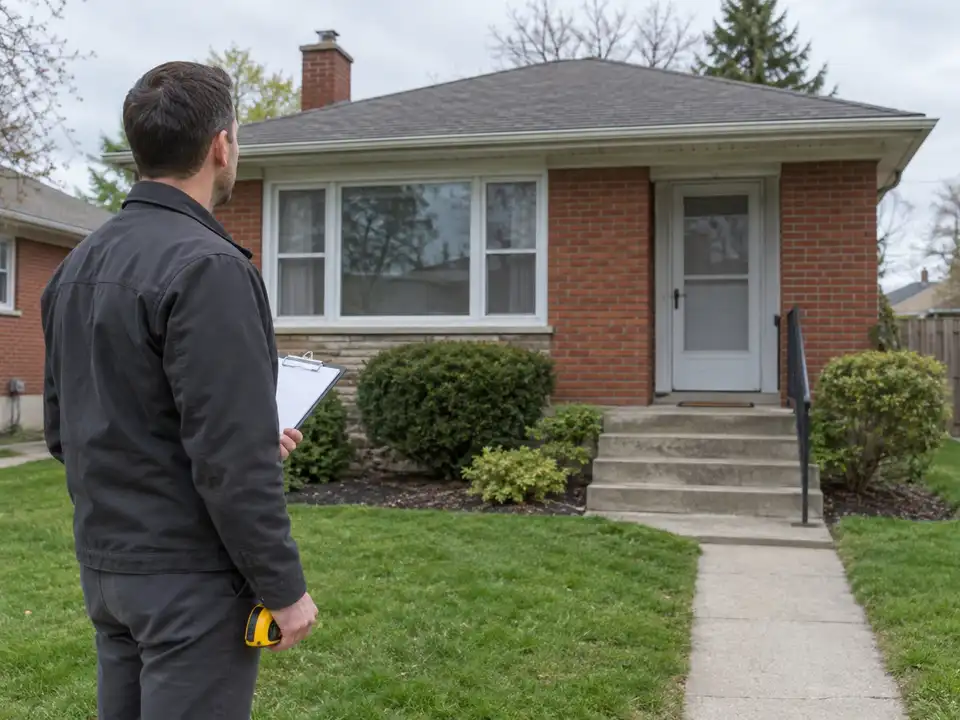
ReverseMortgageEtobicoke.ca walks through an Etobicoke reverse mortgage from the first estimate to the day the money arrives. The homeowner below is an illustration, not a real person. The steps, the order and the timing are how the process actually runs, and it usually takes about three to five weeks from start to finish.
The example homeowner
The homeowner is 75 and lives alone in a detached house in W09, the Humber Heights and Richview district. In this illustration the house is worth the W09 detached benchmark of $1,213,200 (TRREB Market Watch, September 2026). At 75, that value supports up to about $701,000.
The homeowner owes $60,000 on a home equity line of credit and is behind on part of the City of Toronto tax bill. The goal is about $150,000 for repairs and help at home, with no required monthly mortgage payments. A daughter is copied on every email.
Step 1: Free estimate
The homeowner fills in a short online form in about 90 seconds and sees a first figure on screen. Asking for an estimate doesn’t affect your credit. Nothing is signed, and there’s no sales pressure.
Step 2: Every lender compared
Richard Hopkins, Mortgage Broker, then checks the house with all four Canadian reverse mortgage lenders, Bloom, Equitable Bank, Home Trust and HomeEquity Bank (CHIP). His first email sets out how much the house could provide and which lenders fit, then asks how much the homeowner would like.
The homeowner and the daughter read it at home and reply with questions by email. A phone or video call follows if they want one. You never need to visit an office.
Step 3: Application
Once you’ve chosen an option, fill out a quick form and send a few documents. Your credit is checked once, and your application goes only to the lender you choose.
For this homeowner, the documents are two pieces of ID (a driver’s licence and a passport work well), the line of credit statement and the latest property tax bill. Income is listed on the form, and proof is rarely needed.
Step 4: Approval
The lender usually sends its mortgage commitment letter within a day or two.
The letter sets out the rate, the costs and the conditions. Richard goes through it with the homeowner by email before anything else happens.
Step 5: Appraisal
An appraiser visits the house to confirm its value. Depending on the lender, the lender or the broker orders the appraisal, which usually costs about $350. The amount available then adjusts to the appraised value, up or down from the estimate.
This is one of only two in-person moments in the whole process. The homeowner just needs to be home to open the door.
Step 6: Independent legal advice
The homeowner meets a lawyer who acts only for them and explains the mortgage before signing. In Ontario this independent legal advice usually costs about $800 to $1,200. Most lenders ask for this meeting in person, at the lawyer’s office. Some allow a video call when travel is truly hard.
Most Etobicoke owners pick a lawyer close to home. Richard can suggest independent lawyers nearby if you don’t have one.
Step 7: Closing
The lender sends the money to the lawyer or title company doing the closing. They pay off your current mortgage, any other debts on the home and the costs, then deposit the remaining money into your bank account.
For this homeowner, the $60,000 line of credit is paid off and closed. The City of Toronto tax arrears are paid too. The rest of the money taken is deposited into the bank account. The unused part of the approval stays available, and interest is charged only on money taken.
After closing
The homeowner keeps living in the house and owns it, as before. Property taxes, home insurance and upkeep stay the homeowner’s job. The Etobicoke property tax guide for seniors covers the dates and relief programs.
To see your own numbers first, try the Etobicoke reverse mortgage calculator or the 10-question requirements check. Owners in towers can read the Etobicoke condo guide, and the broker page explains how the lender pays the brokerage, never you.